

How to Clean Vegan Leather Bags: A 2026 Care Guide
Table of Contents
- Why Vegan Leather Needs a Different Cleaning Routine
- What You'll Need to Clean Vegan Leather Bags
- Step-by-Step: How to Clean Vegan Leather Bags Daily
- How to Remove Stains from Faux Leather
- Best Products for Cleaning Vegan Leather
- Repairing Scuffs, Cracks and Hardware Care
- How to Store Vegan Leather Bags for Longevity
- Final Tips for Lasting Vegan Leather Care
- Frequently Asked Questions
Last Updated: September 7, 2026
Vegan leather has become a staple of modern handbag design, offering the look and feel of leather without the environmental cost. However, learning how to clean vegan leather bags correctly is essential, because faux leather (typically made from polyurethane) does not absorb moisture or conditioners the way animal hide does. The right care routine makes all the difference in preserving their finish. This guide covers daily upkeep, stain removal, and storage practices that keep your bags looking pristine for years.

Why Vegan Leather Needs a Different Cleaning Routine
The single biggest mistake owners make is treating synthetic materials like genuine leather. Vegan leather has a protective coating that repels water, so traditional leather conditioners and oils will simply sit on the surface, attracting dust and leaving a sticky residue (peer-reviewed research). Because the material is non-porous, dirt and oils accumulate on the surface rather than being absorbed, which is good news, as surface stains are easier to remove than deep-set ones. The key is to clean regularly with the right tools and avoid anything that could break down the polyurethane coating, such as abrasive cleaners or alcohol-based wipes.

What You'll Need to Clean Vegan Leather Bags
Before you begin, gather a few simple items you likely already own. You do not need a specialist kit, and most dedicated products for genuine leather are unsuitable.
- Microfiber cloths (lint-free and soft)
- Mild soap or a pH-neutral detergent
- Lukewarm water in a small bowl
- Cotton buds for detailing around zips and edges
- A dry, soft towel for blotting
Avoid baby wipes, makeup remover wipes, or any product containing alcohol, bleach, or ammonia, as these can strip the protective topcoat and cause fading or peeling (a guide on household disinfectants). If unsure about a product, always spot test on an inconspicuous area, such as the inside flap or bottom edge, before applying it to the whole bag.
Step-by-Step: How to Clean Vegan Leather Bags Daily
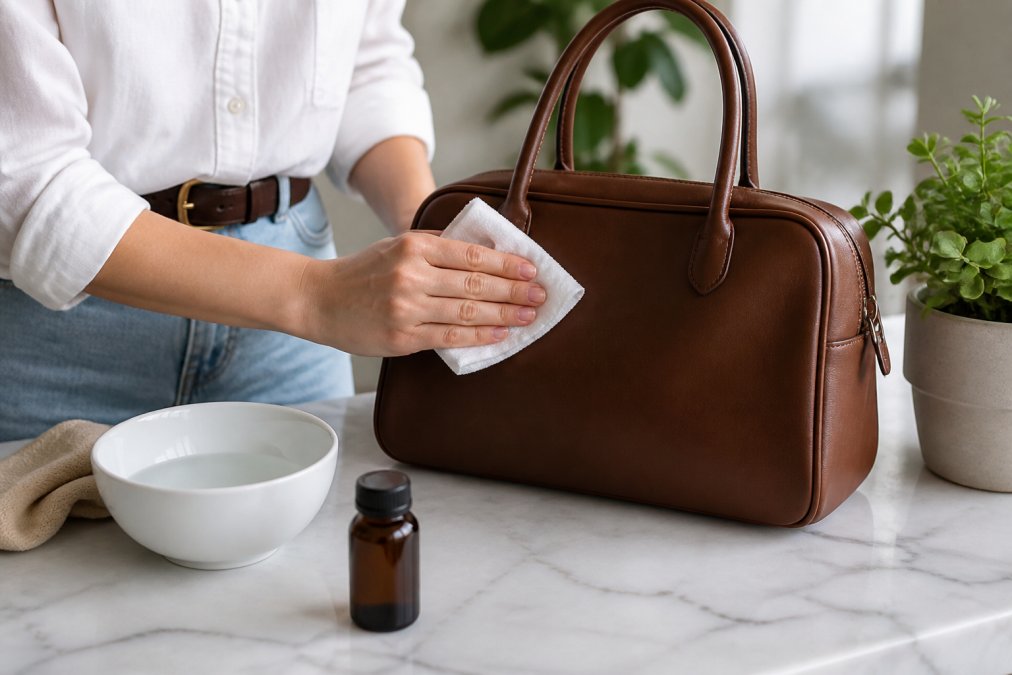
A quick weekly wipe-down is the most effective way to maintain your bag and prevent dirt from building up. Here is the routine we recommend:
- Empty the bag completely. Turn it upside down and shake out crumbs and debris. Use a soft brush or the crevice attachment of a vacuum to remove dust from the lining and corners.
- Dampen your cloth. Dip a microfiber cloth in lukewarm water mixed with a drop of mild soap. Wring it out thoroughly so it is just damp, not wet. Excess moisture can seep into the seams and damage the lining.
- Wipe in circular motions. Gently wipe the entire exterior surface, paying attention to the bottom corners and the area around the handles where oils from your hands collect most.
- Blot with clean water. Using a second cloth dampened with plain water, wipe away any soapy residue. This step is crucial; leftover soap can dull the finish.
- Air dry completely. Place the bag on a dry towel away from direct sunlight and heat sources. Never use a hairdryer, as high heat can cause the synthetic material to warp or bubble (guidance on appliance safety).
- Buff to a shine. Once completely dry, use a fresh dry microfiber cloth to buff the surface gently. This restores the natural sheen of the material.
How to Remove Stains from Faux Leather
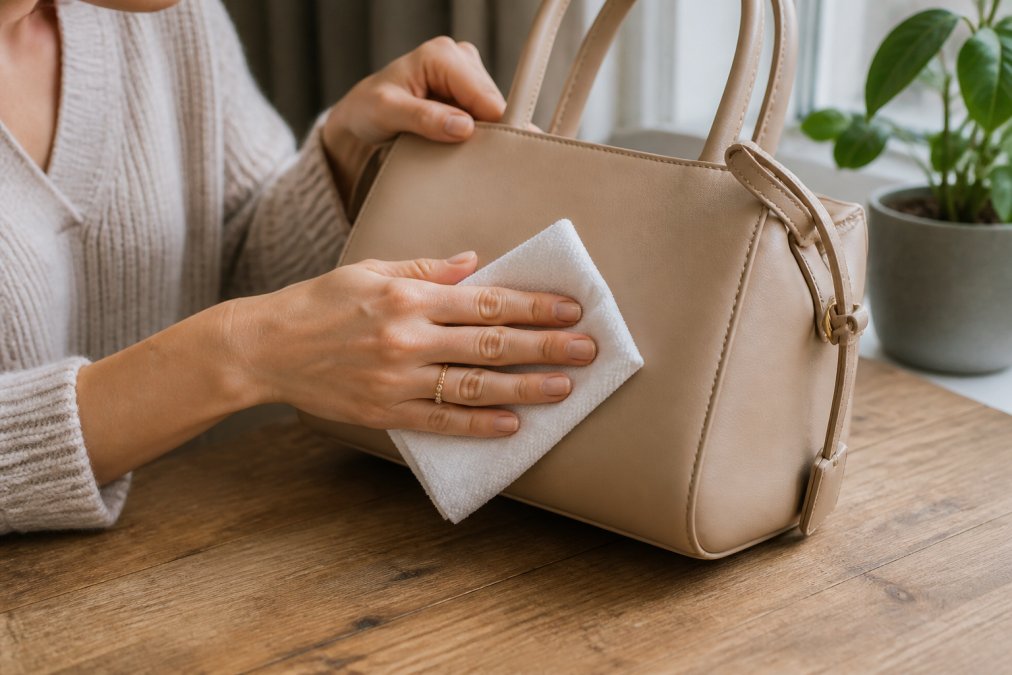
When a spill happens, the golden rule is to act quickly; the longer a stain sits, the harder it becomes to lift. Most common stains, including coffee, ink, and oil, can be treated at home with items you already have. The right approach depends on the type of stain and the colour of your bag, as white and pastel vegan leather requires different handling than black or dark shades.
Oil-Based Stains (Hand Cream, Food Grease, Makeup)
Oil sits on the surface of vegan leather rather than soaking in, which works in your favour. Sprinkle a generous layer of cornflour or talcum powder onto the mark and leave it for at least four hours, or overnight for stubborn grease. The powder draws the oil out of the surface pores. Gently brush it away with a soft cloth, then clean with your mild soap solution. For dark-coloured bags, talcum powder can leave a pale residue if not brushed off thoroughly; a better option is a small amount of washing-up liquid on a damp cloth, worked into a lather before dabbing the stain.
Water-Based Stains (Coffee, Juice, Tea)
Blot the area immediately with a dry cloth to absorb as much liquid as possible. Do not rub, as this spreads the stain and can push it into the seams. Mix a solution of equal parts lukewarm water and white vinegar, dip a cotton bud in it, and dab the stain gently; the vinegar breaks down the tannins in coffee and tea. Follow with a clean, damp cloth to remove any vinegar residue. For white or light-coloured bags, vinegar is safe, but always rinse thoroughly, as leftover vinegar can yellow over time under UV light.
Ink Stains
Ink is the trickiest stain because it is solvent-based. Dab the mark with a cotton bud dipped in isopropyl alcohol (70% concentration is ideal), but test on a hidden area first, as alcohol can affect colour. Blot, do not rub, and repeat until the ink lifts. For dark bags, alcohol can strip the topcoat and reveal a lighter patch; if that happens, a colour-matched permanent marker applied carefully can help blend the colour back. For white bags, a paste of bicarbonate of soda and water applied with a cotton bud can lift ink without the harshness of alcohol.
Colour-Specific Care: White vs. Dark Vegan Leather
White vegan leather is more porous at a microscopic level, meaning it shows every mark, and is prone to yellowing from sunlight and residue left by improper cleaning. To keep white bags bright, clean them monthly with a dedicated white vinyl cleaner or a dilute solution of warm water and a drop of washing-up liquid. Never use bleach or products containing optical brighteners, as these can cause a grey or yellow cast. Store white bags away from direct sunlight and wrap them in acid-free tissue paper to prevent yellowing.
Dark vegan leather, particularly black or deep brown, hides surface dirt but shows dye transfer and scuffs more readily. Denim dye transfer is the most common issue, especially when carried against new jeans. To remove it, use a melamine sponge (the type sold as a magic eraser) dampened with water, rubbing gently in small circles; the micro-abrasive action lifts the transferred dye without damaging the topcoat. Test on a hidden area first, as melamine can dull high-gloss finishes. For scuffs on dark bags, a black or brown shoe polish applied with a cotton bud and buffed with a dry cloth is more effective than on light colours, where polish would be visible.
Stain-Specific Troubleshooting Quick Reference
| Stain Type | Immediate Action | Best Treatment | Avoid |
|---|---|---|---|
| Oil / grease | Blot with paper towel | Cornflour or talcum powder, leave 4+ hours | Rubbing, heat |
| Coffee / tea | Blot with dry cloth | 50/50 water and white vinegar solution | Soap before blotting |
| Ink (ballpoint) | Dab with isopropyl alcohol | Cotton bud with 70% alcohol, blot repeatedly | Rubbing, water first |
| Denim dye transfer | Leave to dry completely | Melamine sponge with water, gentle circles | Alcohol on dark colours |
| Foundation / makeup | Blot with dry cloth | Washing-up liquid lather on damp cloth | Baby wipes, which leave residue |
If a stain has set for more than 24 hours, do not panic. Reapply the treatment and leave it longer. The non-porous nature of vegan leather means stains rarely penetrate the full thickness of the material; they sit on the surface and can usually be lifted with patience and repeated gentle applications.
Best Products for Cleaning Vegan Leather
You do not need specialist cleaners for most routine care. A simple, pH-neutral soap or a dedicated faux leather cleaner works well. Look for labels that specify "vegan leather safe" or "synthetic leather cleaner", as these are formulated without harsh chemicals that can damage polyurethane.
For scuff marks, a standard pencil eraser can work wonders. Gently rub the mark with the eraser, then wipe away the crumbs with a dry cloth. This is often the safest first attempt before reaching for any liquid cleaner.
Repairing Scuffs, Cracks and Hardware Care
Even with the best care, everyday use takes its toll. Scuffs on the corners and edges are the most common sign of wear, particularly for commuters who place their bag on train floors or squeeze it into overhead lockers.
For light scuffs, the eraser method above is often sufficient. For deeper marks, apply a tiny amount of clear shoe polish or a colour-matched leather repair cream with a cotton bud, rub in gently, and buff with a clean cloth to blend the scuff into the surrounding colour.
Cracks are more serious and usually indicate the material has dried out or been exposed to extreme temperatures. Once the polyurethane coating cracks, it is difficult to reverse. Prevention is the best cure: keep the bag away from radiators and direct sunlight, and never store it folded or crushed.
Hardware deserves attention too. The zips and metal feet collect grime and can tarnish. Wipe them with a dry cloth after cleaning. For stubborn dirt on zips, dip a cotton bud in warm soapy water and run it along the teeth, then dry thoroughly. A dry lubricant, such as a silicone-based spray, keeps zips running smoothly without leaving an oily residue that attracts dust. Learn more about caring for accessories.
How to Store Vegan Leather Bags for Longevity
Proper storage is just as important as cleaning. How you store your bag determines whether it keeps its shape and finish. The UK climate presents specific challenges: damp winters, variable humidity, and homes that fluctuate between cold and centrally heated, all requiring a more thoughtful approach than simply hanging a bag on a hook.
Short-Term Storage (Daily to Weekly)
For bags you rotate weekly, the priority is keeping dust off and maintaining shape. After cleaning and drying your bag completely, stuff it with acid-free tissue paper or an old cotton t-shirt. Do not use newspaper, as the ink can transfer onto the lining. Keep the bag in its original dust bag, or wrap it in a cotton pillowcase, to protect the surface from dust while allowing the material to breathe.
Avoid hanging your bag by its straps for long periods, as the weight can stretch the handles and distort the shape over time. Instead, lay it flat on a shelf or stand it upright with the base supported; a bag that slumps forward will develop creases at the corners.
Long-Term Storage (Seasonal or Longer)
If you are storing a bag for more than a month, for example, switching from a winter bag to a summer one, the rules change. First, clean the bag thoroughly before storage, as stains that are invisible when the bag is in use will set permanently over months of sitting. Second, condition the hardware: wipe zips and buckles with a dry cloth and, if metal, give them a light coat of clear nail polish or a silicone-based protectant to prevent tarnishing in humid conditions.
Third, do not over-stuff. While tissue paper maintains shape, over-stuffing stretches the seams. Fill the bag to about 80% of its capacity. For structured bags, use tissue paper and a small desiccant sachet (the type that comes in shoe boxes) to absorb residual moisture.
Climate-Specific Considerations for the UK
British weather is unpredictable, and your storage location should account for that. Avoid lofts, garages, and conservatories, where temperature swings are extreme. The ideal location is a bedroom wardrobe or a hallway cupboard, spaces that stay at a relatively stable room temperature.
Humidity is the silent killer of vegan leather. Unlike genuine leather, which absorbs and releases moisture, polyurethane traps it. In a damp environment, this can lead to hydrolysis, where the polymer structure breaks down and the surface becomes sticky or begins to peel, and this is irreversible. To prevent it, place a small silica gel sachet inside the bag and replace it every three months. Do not use moisture absorbers that contain liquid, as they can leak.
Position and Rotation
If you have multiple bags, rotate which one sits on top of the pile, as constant pressure can flatten a bag's structure. Store bags upright rather than stacked, if space allows. If you must stack, place the heaviest bag at the bottom and put a layer of acid-free tissue between bags to prevent hardware from scratching the surface below.
The One-Month Check
Set a reminder to check stored bags once a month. Open the dust bag, inspect for any signs of mould, peeling, or sticky patches, and let the bag air for an hour in a dry room. This catches problems early, when they are still treatable, rather than discovering a ruined bag at the start of the season.
| Storage Scenario | Duration | Key Action | Common Mistake |
|---|---|---|---|
| Daily use | 1-7 days | Dust bag, light stuffing | Hanging by straps |
| Weekly rotation | 1-4 weeks | Clean before storing, tissue paper | Leaving stains to set |
| Seasonal change | 1-6 months | Full clean, desiccant sachet, hardware care | Storing in plastic or loft |
| Long-term archive | 6+ months | Monthly check, airing, silica gel replacement | Over-stuffing, damp locations |
Choose a cool, dry location away from direct sunlight, as prolonged UV exposure can cause colours, especially darker shades, to fade. A wardrobe shelf or a drawer are ideal spots. If you live in a period property with solid walls that get cold in winter, check the back of your wardrobe for condensation; if you find any, move your bags to a different location immediately.
Final Tips for Lasting Vegan Leather Care
Caring for a vegan leather bag does not need to be complicated. It is durable, water-resistant, and easier to maintain than genuine leather, but it does require a gentle hand and consistent attention.
| Care Task | Frequency | Best Method | What to Avoid |
|---|---|---|---|
| Surface wipe-down | Weekly | Damp microfiber cloth with mild soap | Alcohol wipes, baby wipes |
| Stain treatment | Immediately after spill | Blot with vinegar solution or cornflour | Rubbing, harsh solvents |
| Scuff removal | As needed | Pencil eraser or clear polish | Abrasive pads |
| Deep conditioning | Never | Not required for non-porous material | Leather conditioners, oils |
| Storage | Ongoing | Dust bag, stuffed, laid flat | Plastic bags, hanging, sunlight |
A common question is whether vegan leather is as durable as the real thing. A well-made vegan leather bag that is cared for properly will last for many years of daily use. The material is inherently more resistant to water and staining than untreated leather, making it an excellent choice for commuters.
If you are looking for a bag that combines this low-maintenance durability with considered design, explore the JLR London collection. Our bags are crafted from premium, sustainably sourced vegan leather and designed in London to handle real life, from the daily commute to weekend travel. Each piece is hand-finished and can be personalised with complimentary hand-foiled initials, making it a truly individual investment.
Frequently Asked Questions
What is the best cleaner for vegan leather?
The best cleaner for vegan leather is a mild soap or pH-neutral detergent mixed with lukewarm water. Avoid harsh chemicals, abrasive cleaners and bleach-based products, as these can damage the polyurethane coating. A simple solution of water and a drop of mild soap applied with a soft microfiber cloth is effective for most daily cleaning. Always spot test any new cleaner on a hidden area first to ensure it does not discolour the material.
How do you remove stains from synthetic leather?
To remove stains from faux leather, first blot the area with a damp cloth to lift any excess residue. For oil-based stains, apply a small amount of mild soap directly to the cloth and gently work it into the stain using circular motions. For ink or scuff marks, a solution of water and a tiny amount of rubbing alcohol can be effective. Always rinse the area with a clean, damp cloth afterwards and allow it to air dry away from direct heat.
Does vegan leather crack over time?
Vegan leather can crack over time if it is not cared for properly. Exposure to prolonged direct sunlight, extreme heat and dry conditions can cause the polyurethane layer to dry out and crack. Regular cleaning to remove dirt and grime, along with proper storage in a cool, dry place or a dust bag, will help maintain its flexibility. Conditioning products designed for vegan leather can also help keep the material supple.
Caring for your vegan leather bag does not need to be complicated. With a weekly wipe-down, prompt stain treatment, and sensible storage, your bag will keep its beautiful finish for years. At JLR London, we believe great bags should work hard and look beautiful every day, and a little care goes a long way. Explore our range of vegan leather handbags and accessories, and find the perfect companion for your daily routine.



Leave a comment
This site is protected by hCaptcha and the hCaptcha Privacy Policy and Terms of Service apply.