

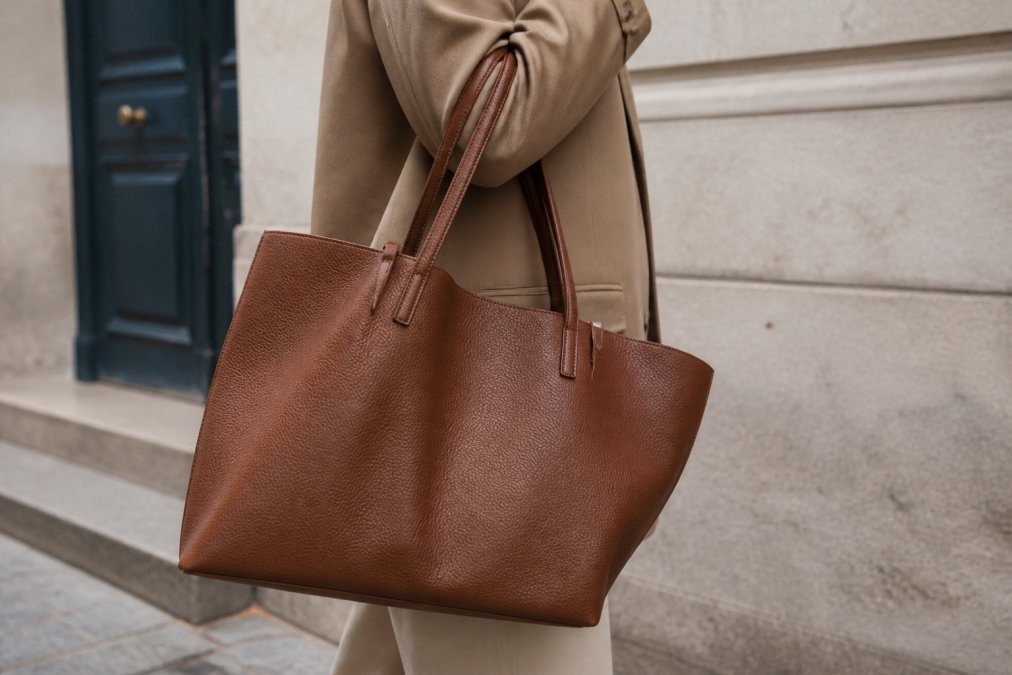
Are Vegan Leather Bags Durable? An Honest 2026 Guide
Table of Contents
- What Vegan Leather Bags Are Actually Made Of
- How Long Do Vegan Leather Bags Last?
- Does Vegan Leather Crack Over Time?
- Vegan Leather vs Real Leather Durability
- How to Clean Vegan Leather (Without Damaging It)
- Repair, Storage and Climate: Making Vegan Leather Last
- Frequently Asked Questions
Last Updated: September 16, 2026
What Vegan Leather Bags Are Actually Made Of
Vegan leather bags are made from a base fabric coated with a polymer, most commonly polyurethane (PU) or polyvinyl chloride (PVC), or from newer plant-derived materials. The coating determines how the bag wears; the backing fabric determines how it holds its shape.
At JLR London, we design non-leather bags from premium vegan leather. The old assumption that all faux leather is a thin plastic film no longer holds.

Three material families dominate the category:
- PU (polyurethane): Softer, lighter and more breathable than PVC. Most quality vegan leather bags use PU.
- PVC (polyvinyl chloride): Heavier and stiffer, with a high-gloss finish. It resists water well but uses plasticizers that stiffen over time.
- Plant-based: Coatings made with bio-based content, often blended with PU for strength.
PU, PVC and Plant-Based Materials Compared
| Material | Feel | Water resistance | Typical lifespan | Best for |
|---|---|---|---|---|
| PU | Soft, flexible | Moderate | 2-5 years | Everyday work bags |
| PVC | Stiff, glossy | High | 2-4 years | Structured, wipe-clean styles |
| Plant-based | Soft, varies | Moderate | 2-5 years | Lower-impact buyers |
Material quality and construction techniques matter more than the label. Stitching, hardware durability and a reinforced base all extend life far more than the coating alone.
How Long Do Vegan Leather Bags Last?
A well-made vegan leather bag typically lasts two to five years with regular use. The gap is real, but it narrows sharply once you factor in how the bag is made and how it is treated.
What most guides miss is that lifespan is decided at the seams and the strap anchors, not the surface. A bag with bar-tacked stitching and solid metal hardware will outlast a cheaper one with a better coating every time.
Durability comes down to four things:
- Material composition and coating thickness
- Tensile strength of the backing fabric
- Construction quality: stitching, lining, hardware
- How you store and rotate the bag
Cost per wear is the honest measure.
Does Vegan Leather Crack Over Time?
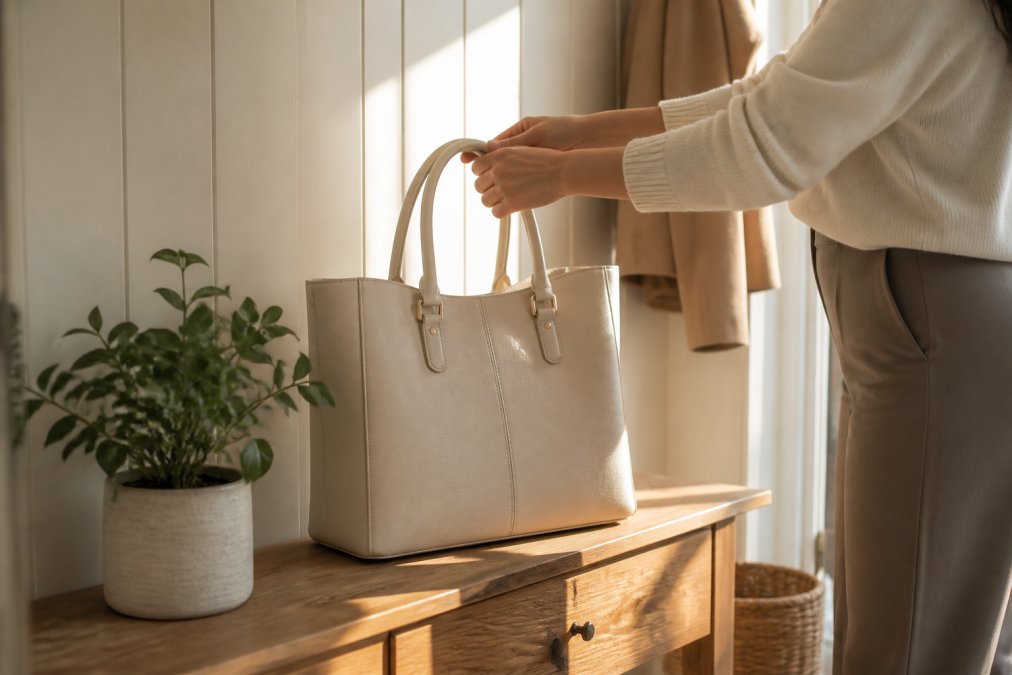
Yes, vegan leather can crack, peel and split over time, and the cause is usually predictable. The polymer coating sits on a fabric backing, and when that coating loses flexibility it separates from the base.
The main culprit is hydrolysis, a chemical breakdown driven by moisture, heat and time. Plasticizers leach out of PU and PVC, leaving the surface brittle. Add UV exposure from sunlight and the process speeds up.
Signs to watch for:
- Fine surface cracking along fold lines
- Peeling at corners and strap edges
- A dull, chalky finish that no longer buffs up
- Stiffness where the bag used to flex
Where a bag cracks matters. Surface cracking is cosmetic; cracking at a strap anchor or zip edge is structural and usually means the end is close.
Vegan Leather vs Real Leather Durability
Real leather wins on raw longevity, and it is worth being precise about why. Leather's collagen fibre structure lets it flex repeatedly without failing, and it ages by developing a patina rather than degrading. Vegan leather has no equivalent self-repair mechanism, and once the polymer coating has peeled away from the backing fabric, that area cannot be restored.
That said, the comparison is not a clean win for animal leather.
Repairability is the real dividing line. Minor vegan leather damage is fixable, small scuffs can be touched in with a colour-matched flexible filler, and loose stitching can be re-sewn. What cannot be fixed is a coating that has already separated. This is why the repairability gap matters more than the raw lifespan gap: a leather bag can be kept alive indefinitely with occasional professional care, while a vegan leather bag has a practical ceiling.
Cost per wear tells a more honest story. A bag worn daily for three years at £90 works out at roughly 8p per wear. A £30 bag replaced twice over the same period costs about 5p per wear but involves three separate purchases, three deliveries and three end-of-life disposals. A £400 leather bag worn daily for ten years works out at around 11p per wear, but carries a much higher upfront cost and needs conditioning to stay supple. The cheapest option per wear is rarely the one that lasts longest.
Ecru Original Arlo Circle Keyring →
Environmental cost per year is a separate calculation. WRAP's textile and leather sustainability research notes that material choice, not just material type, drives environmental impact across a product's life. A vegan leather bag replaced every three years carries the embodied impact of three products; a leather bag kept for a decade carries one, but with the higher impacts of animal agriculture and tanning. Neither option is unambiguously greener, and the honest answer depends on how long you actually keep the bag.
Water and weather behaviour differs. Real leather is damaged by prolonged water exposure and needs conditioning to stay supple. Vegan leather is water-resistant, animal-free, cruelty-free and easier to wipe clean, which makes it the more practical choice in a wet climate if you are not prepared to baby the bag.
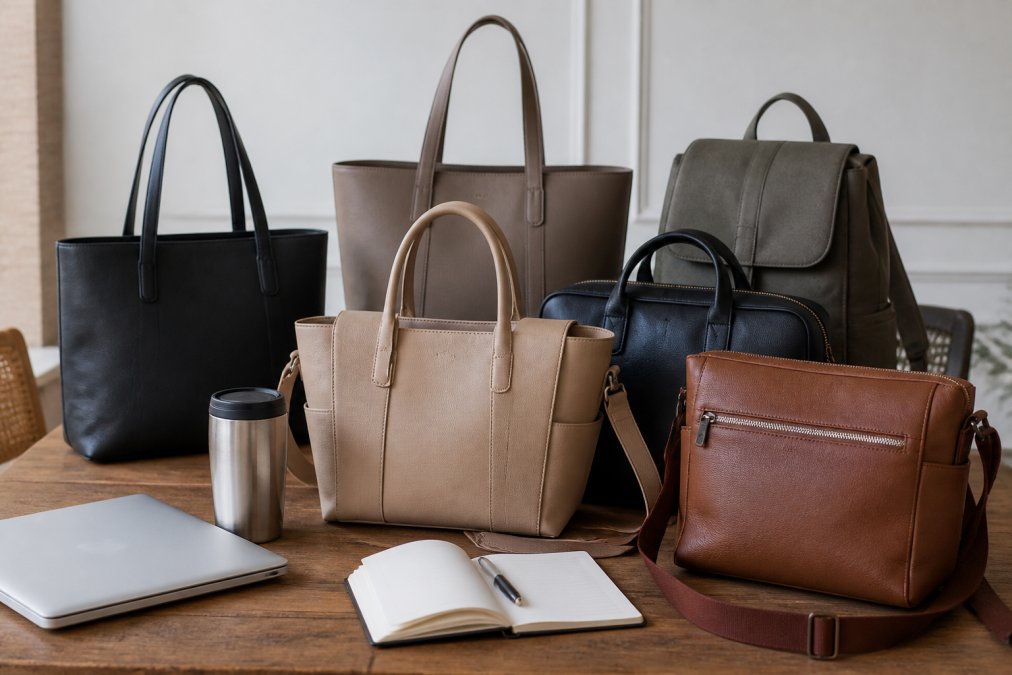
The practical verdict: if you want a bag for a decade and are willing to maintain it, buy responsibly sourced leather. If you want a beautiful, functional bag you will happily replace every few years, vegan leather is a good choice, provided you buy one with reinforced seams and hardware, because that is what determines whether you get two years or five.
How to Clean Vegan Leather (Without Damaging It)
Cleaning vegan leather takes five minutes and a very gentle hand. The coating is a thin polymer film, and harsh chemicals, alcohol or abrasive cloths will strip it and trigger the exact cracking you are trying to avoid.
A simple maintenance routine:
- Empty the bag and wipe it with a dry microfibre cloth.
- Mix a few drops of mild soap into lukewarm water.
- Dampen a cloth, wring it out, and wipe the surface in gentle circles.
- Wipe again with a clean damp cloth to remove residue.
- Dry naturally, away from radiators and direct sun.
For stubborn marks, test a small hidden area first. Conditioning products designed for vegan leather can restore flexibility, but apply sparingly; over-conditioning attracts dust.
Repair, Storage and Climate: Making Vegan Leather Last
Repairability is where vegan leather gets a bad reputation it only partly deserves. A cracked coating cannot be re-grown, but minor damage is fixable. Small scuffs can be touched in with a colour-matched flexible filler, and loose stitching can be re-sewn by a leatherworker. What you cannot do is restore a coating that has already peeled away.
Climate-specific durability changes the picture too. In humid conditions, hydrolysis accelerates, so store bags with a silica gel sachet and avoid damp cupboards. In dry, centrally heated homes, the coating loses flexibility, so keep bags away from radiators. UV exposure fades and embrittles the surface in both cases.
Storage conditions do more for lifespan than any product:
- Stuff the bag with acid-free tissue to hold its shape
- Store in a breathable cotton dust bag, never plastic
- Keep away from direct sunlight and heat sources
- Rotate bags rather than wearing one daily
- Wipe and dry before storing for the season
JLR London's non-leather bags are designed and hand-finished with reinforced construction, and complimentary hand-foiled personalisation means a bag that stays yours for years.
Vegan leather will not outlast premium animal leather. What it will do is look beautiful, resist water, and take a daily commute in its stride for years if you choose well and care for it properly. JLR London builds bags for exactly that: functional designs for modern lifestyles, crafted from premium vegan leather, with free standard UK shipping and a loyalty rewards scheme for customers who come back. Get started with JLR London and find a bag that works as hard as you do.
Frequently Asked Questions
What are the disadvantages of vegan leather bags?
Vegan leather bags are not without drawbacks. The key is checking material quality rather than assuming all vegan leather performs the same.
Are vegan leather bags worth the investment?
It depends on the quality of the material and the construction. Look for details like reinforced handles, smooth zips and a material that feels supple rather than stiff.
Does real leather last longer than vegan leather?
The deciding factors are material composition, construction techniques and how well you maintain the bag, not simply whether it is animal or animal-free.
How can you tell if a vegan leather bag is high quality?
Check three things. First, the material description: PU with a woven backing outperforms PVC, and plant-based options like cactus or apple leather are worth noting. Second, the stitching: even, tight stitches and reinforced stress points signal good construction. Third, the hardware: metal zips and clasps that feel solid rather than lightweight. A high-quality vegan leather bag will also have a soft, flexible feel rather than a stiff plastic surface.


Leave a comment
This site is protected by hCaptcha and the hCaptcha Privacy Policy and Terms of Service apply.